Evidence for Velocity/Lactigo Gel For Equine and Human Health
/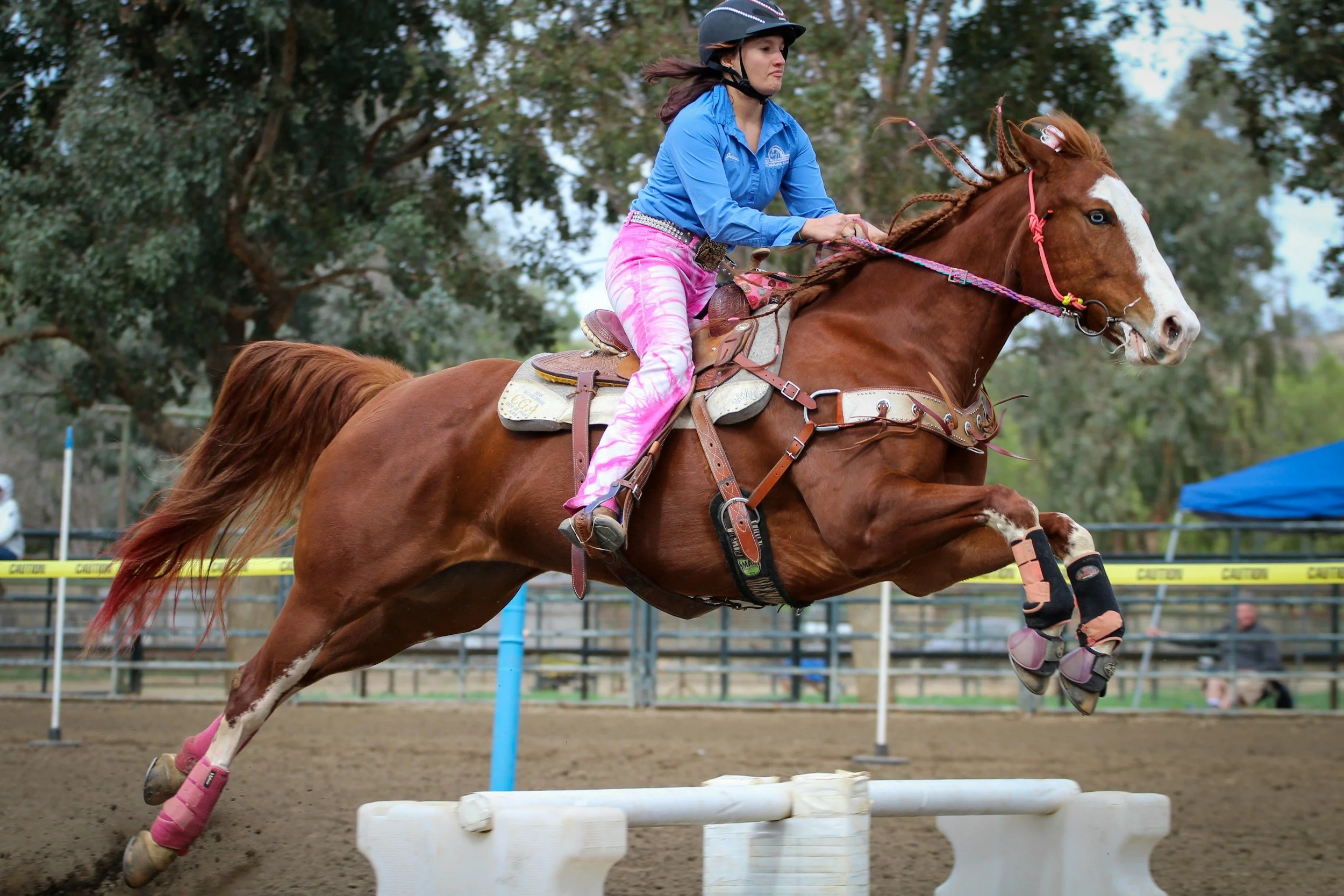

I first became interested in LactiGo after a colleague testimonial as well as a very personal experience. I had shoulder pain while playing pickleball, applied LactiGo, and noticed relief very quickly. That made me want to dig deeper into the science of carnosine, the active compound behind LactiGo, and whether its benefits might extend beyond people to horses as well. On LactiGo’s equine page, the company’s animal-health line “Velocity” is described as a topical emulgel designed to support comfort and movement in horses, and the page includes trainer, veterinarian, and show-jumping testimonials describing noticeable changes in comfort and movement. Those statements are anecdotal, but they are worth discussing alongside the physiology.
Why carnosine matters
Carnosine is not just a trendy ingredient. It is a naturally occurring dipeptide that has been studied for its role in exercise performance and skeletal muscle homeostasis, and reviews have also highlighted anti-glycation, antioxidant, and neurologic interest around carnosine. Human clinical and review literature has explored carnosine in areas ranging from exercise performance to cognition and metabolic health, including a randomized trial in type 2 diabetes that reported improvements in glycemic and inflammatory markers.
What the human LactiGo evidence shows
The human story is promising, but it is not one-sided. A 2016 study on LactiGo topical gel in elite male soccer players reported improved repeated 1000-meter performance and a clinically meaningful improvement in Yo-Yo intermittent recovery performance after application. A newer 2025 paper also reported that topical carnosine gel improved intermittent high-intensity exercise performance in world-class rugby sevens players. At the same time, a 2023 randomized crossover trial in trained male cyclists found no statistically significant improvement in repeated Wingate sprint performance from a single recommended dose. In other words, the topical carnosine story is encouraging, but still mixed enough that it should be presented honestly.
Why equine application is especially interesting
Horses make the topic even more compelling because their muscle physiology gives us a useful lens. A classic horse study found that free intramuscular carnosine was highest in horses with a greater percentage of fast-twitch glycolytic fibers, supporting the idea that carnosine functions as an intracellular buffer in equine muscle. That matters because buffering capacity is directly relevant to fatigue, effort, and recovery in high-output animals.
Even more interesting, a 2021 randomized placebo-controlled crossover study in 10 Thoroughbred racehorses tested transdermal delivery of carnosine into the middle gluteal muscle. Compared with placebo, intramuscular carnosine was reported to be about 35% higher at 30 minutes and about 46% higher at 60 minutes after application, though not significantly different at 120 minutes. The study concluded that intramuscular carnosine could be increased through a transdermal delivery system within 60 minutes, with possible implications for performance and recovery. That does not prove every equine outcome owners hope for, but it is one of the strongest reasons people in the horse world are paying attention.
What horse owners and trainers are reporting
This is where anecdotal testimony comes in. On LactiGo’s Velocity page, the equine product is described as supporting “comfort and movement,” with one trainer saying the difference in their horses’ comfort and movement was “remarkable,” a veterinary professional saying they recommend it because of the science-backed formula and competition compliance, and a show-jumping competitor saying it helps support comfort before competition. The same page says the formula is designed for noticeable results in under 60 minutes and states that it is FEI- and USEF-compliant and independently tested. These are company-published testimonials and product claims, so they should be viewed as real-world reports, not the same thing as blinded clinical endpoints.
That distinction matters. In fact, LactiGo’s own Velocity page says the animal product statements have not been evaluated by the FDA, are not intended to diagnose, treat, cure, or prevent disease in animals, and that referenced information is third-party research rather than a direct study of the Velocity formulation itself. I actually think including that kind of transparency makes the overall case stronger, not weaker. It shows we can be enthusiastic without pretending the science is more settled than it is.
My clinical take
When I step back and look at the full picture, here is what I see:
The case for carnosine itself is strong. The case for topical carnosine in humans is promising but mixed. My personal experience is astounding. Click here to see table of my progress over a 6 week period. Go to the “Featured blog”. The case for equine use becomes especially interesting because there is both biologic plausibility in horse muscle physiology and direct evidence that transdermal application can raise intramuscular carnosine in Thoroughbreds within about an hour. Add to that the real-world reports from trainers, veterinarians, riders, and horse owners, and you have a product category that deserves serious attention.
Bottom line
For people, LactiGo may be worth considering as part of a performance, recovery, or comfort-support strategy. For horses, the equine application is not just marketing language; it is supported by horse-specific physiology and at least one controlled study showing transdermal carnosine delivery into equine skeletal muscle. That said, it is still wise to present the product responsibly: there is promising evidence, there are strong anecdotes, and there is still room for more independent research.
How to Apply LactiGo:
Velocity™ Veterinary Quick Reference
What it is
Velocity™ is a topical carnosine emulgel designed to support equine muscle performance and recovery.
Common uses
Supports muscle fatigue
Helps with post-exercise recovery
May ease muscle stiffness and tension
Useful between bodywork or rehabilitation sessions
How it works
Carnosine helps buffer the buildup of hydrogen ions in working muscle. This supports healthy pH balance and may help delay fatigue.
How to apply
Large muscle groups: Apply 2–4 pumps and massage into the tissue
Lower limbs: Apply 1–2 pumps
Use 30–60 minutes before exercise or after work
Competition status
FEI compliant
USEF compliant
Racing compliant
No withdrawal period required
1. Strong Evidence for Carnosine (the active compound)
There is substantial research on carnosine itself.
What is Carnosine?
Carnosine is a naturally occurring dipeptide made from two amino acids—beta-alanine and histidine. It is often described as a non-essential compound, meaning the body can produce it on its own without needing to obtain it directly from food.
However, there are two important factors to understand when thinking about carnosine levels in the body:
Absorption and utilization can be limited with oral intake
When carnosine is taken orally, much of it is broken down in the bloodstream by an enzyme called carnosinase, which means only a portion reaches tissues such as muscles or the brain in its intact form.Carnosine levels decline with aging
Research shows that carnosine concentrations in muscle and other tissues tend to decrease as we age, which may affect buffering capacity, muscle performance, and cellular protection.
This is why researchers have explored alternative delivery methods, including topical or transdermal approaches, to help deliver carnosine more directly to tissues.
Documented benefits of carnosine include:
Antioxidant
Carnosine scavenges:
hydroxyl radicals
peroxynitrite
reactive aldehydes
Anti-glycation
Carnosine can reduce AGE formation. AGEs contribute to:
aging
diabetes
neurodegeneration
Mitochondrial protection
Carnosine protects mitochondria from:
oxidative damage
lipid peroxidation
pH buffering
Carnosine buffers acid during metabolic stress.
Neurological effects
Studies suggest potential benefits in:
autism
cognitive decline
neuroinflammation
Example clinical research:
Autism trials (2002–2006) showed improved language and behavior scores
Anti-glycation studies suggest longevity and metabolic protection
(However, most studies used oral supplementation, not topical delivery.)
2. Evidence for Transdermal Delivery
Transdermal delivery depends on:
molecular size
lipophilicity
formulation technology
General facts:
Skin blocks ~90–95% of molecules
Only small or specially formulated molecules penetrate
Well-established transdermal drugs include:
nicotine
testosterone
estradiol
fentanyl
For carnosine:
Evidence is limited.
However:
Some topical peptide studies show localized absorption and tissue signaling, even without large systemic blood levels.
This could explain anecdotal effects.
3. Why People Report Effects (Anecdotal Evidence)
Many users report:
calmness
improved sleep
reduced muscle fatigue
improved neurological symptoms
Possible explanations:
Local nerve modulation
Skin contains a dense neuroimmune network.
Topical compounds can influence:
peripheral nerves
cytokines
nitric oxide signaling
Local buffering
Bicarbonate may alter:
tissue pH
inflammatory microenvironment
Placebo or sensory effect
Menthol or cooling may contribute to perceived effects.
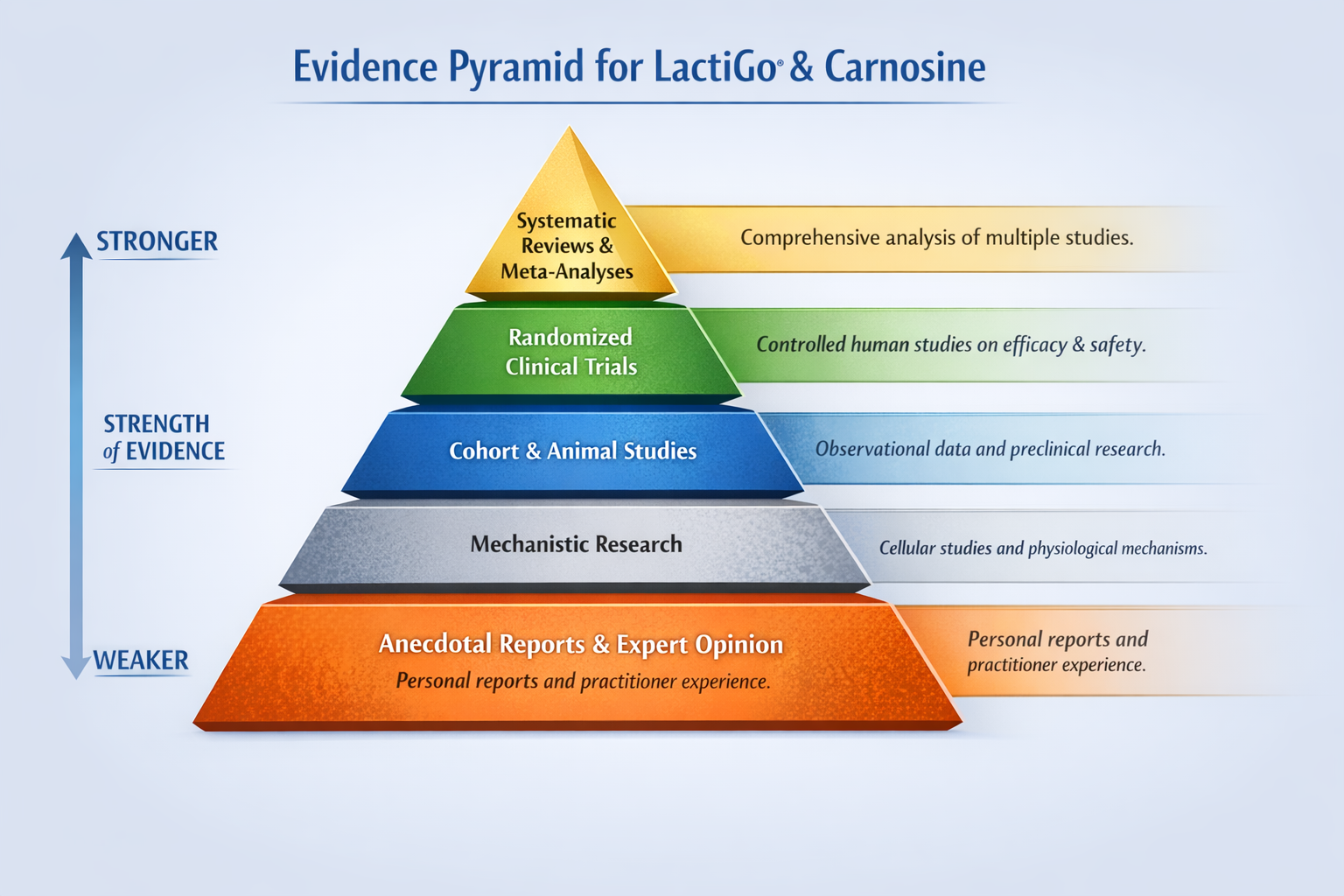
4. Strength of Evidence (Evidence Pyramid)
Why Topical Carnosine (LactiGo) May Work Through the Skin–Brain Axis
A growing concept in physiology is that the skin is not just a barrier — it is a neuro-immune sensory organ connected to the brain.
Topical compounds can influence nerve signaling, inflammation, and autonomic tone even when systemic blood levels are low.
1. The Skin Is Rich in Nerve Endings
Human skin contains millions of sensory receptors.
Major types:
• Free nerve endings – detect pain, temperature, chemicals
• C-fibers – slow nerve fibers linked to autonomic and emotional regulation
• Mechanoreceptors – pressure and touch sensors
These nerves communicate with:
spinal cord
brainstem
hypothalamus
vagus nerve system
This network is sometimes called the cutaneous neuro-immune system.
2. The Skin Communicates With the Brain
The skin actually produces many signaling molecules.
Examples:
nitric oxide
cytokines
neuropeptides
endorphins
Skin cells also contain receptors for:
serotonin
dopamine
acetylcholine
cortisol
This means chemical signals applied to skin can influence systemic physiology through neural signaling rather than bloodstream absorption.
3. The Skin–Brain–Immune Axis
Researchers now refer to this network as the:
Skin–Brain Axis
The pathway works like this:
Skin stimulus
⬇
Peripheral nerve activation
⬇
Signals travel to spinal cord
⬇
Brainstem autonomic centers
⬇
Changes in:
vagus nerve activity
stress response
inflammation
immune signaling
This is one reason massage, acupuncture, and topical treatments can influence the nervous system.
4. Why This Matters for Carnosine
Carnosine has several properties that could influence this system.
Anti-glycation - Reduces reactive carbonyl compounds that irritate tissues.
Antioxidant activity - Neutralizes oxidative stress that activates pain fibers.
pH buffering - Neutralizes local acidity.
Nitric oxide modulation - Influences vascular tone and nerve signaling.
When applied to skin, these actions may:
calm irritated nerve endings
reduce inflammatory signals
alter autonomic balance
5. Possible Vagus Nerve Effects
Peripheral nerve signaling can affect the vagus nerve, which controls:
digestion
inflammation
heart rate
emotional regulation
Improved vagal tone can produce:
calmness
reduced anxiety
improved digestion
improved metabolic signaling
This may explain anecdotal reports such as:
calmer children with autism
improved sleep
improved mood
6. Another Possible Mechanism: Nitric Oxide
Carnosine can influence nitric oxide signaling. Nitric oxide regulates:
blood flow
mitochondrial signaling
neuronal communication
Topical stimulation of nitric oxide pathways may produce systemic effects even with minimal absorption.
7. Why Athletes Studies May Miss These Effects
Most sports studies only measure:
performance
lactate
muscle buffering
But they do not measure:
autonomic nervous system changes
vagal tone
brain inflammation
neuroimmune signaling
Therefore a product could:
Have neurological effects but still fail athletic performance studies.
8. Practical Clinical Interpretation
For a clinician evaluating LactiGo:
Evidence hierarchy:
Strong evidence
• carnosine biological effects
Moderate evidence
• neuroimmune signaling through skin
Weak evidence
• systemic absorption of topical carnosine
However: Neural signaling through skin is biologically plausible and increasingly recognized.
Simplified Summary
Topical LactiGo may work through three pathways:
1️⃣ Local buffering and antioxidant effects in tissue
2️⃣ Activation of skin nerve receptors
3️⃣ Signaling to the brain through the skin–brain axis and vagus nerve
These mechanisms could explain why some patients experience:
calmness
neurological improvement
metabolic benefits
even if blood levels of carnosine do not rise significantly.
Timeline of Major Scientific Discoveries About Carnosine
| Year | Discovery |
|---|---|
| 1900 | Carnosine first identified in skeletal muscle tissue by Russian scientist Vladimir Gulevich |
| 1930s | Recognized as a pH buffer in muscle metabolism |
| 1970s | Researchers discover its antioxidant and metal-chelating properties |
| 1980s | Carnosine found in high concentrations in brain tissue |
| 1990s | Studies reveal anti-glycation and anti-aging effects |
| 2000 | First clinical trials exploring carnosine in neurological conditions |
| 2002 | Randomized study shows improvements in autism spectrum disorder symptoms |
| 2010–2015 | Increasing research on mitochondrial protection and neuroprotection |
| 2018 | Clinical trial demonstrates reduction in AGEs and inflammatory markers in diabetes |
| 2020s | Growing interest in brain injury, aging, metabolic disease, and exercise physiology |
This timeline highlights how carnosine has evolved from a muscle metabolite discovery to a compound being investigated for brain health, metabolic disease, and cellular aging.
Final Perspective
Carnosine represents a unique multi-mechanistic biological molecule that interacts with several major systems involved in health and disease.
Scientific research suggests potential benefits in:
oxidative stress regulation
mitochondrial function
neurotransmitter balance
inflammation modulation
metabolic and glycation stress
Although topical formulations like LactiGo are still an evolving area of research, the underlying science of carnosine provides a strong mechanistic foundation for continued investigation.
The Bottom Line
Although topical formulations like LactiGo are still an evolving area of research, the underlying science of carnosine provides a strong mechanistic foundation for continued investigation.
Scientific evidence strongly supports carnosine as a biologically active and protective molecule with roles in:
oxidative stress defense
mitochondrial energy metabolism
neurotransmitter balance
anti-inflammatory regulation
metabolic protection.
While research on topical delivery methods such as LactiGo is still developing, the underlying biochemical science of carnosine provides a compelling rationale for continued investigation.
*Important* My affiliate information is required (see disclosure below). Put it in the required field at the end of the form similar to below:
Dr. Paul Kwik D.C.; ID: 28365; Email: drpaulkwik@bodyintelligent.com

LactiGo FAQ: How It Compares With Other Performance and Recovery Gels
What is LactiGo?
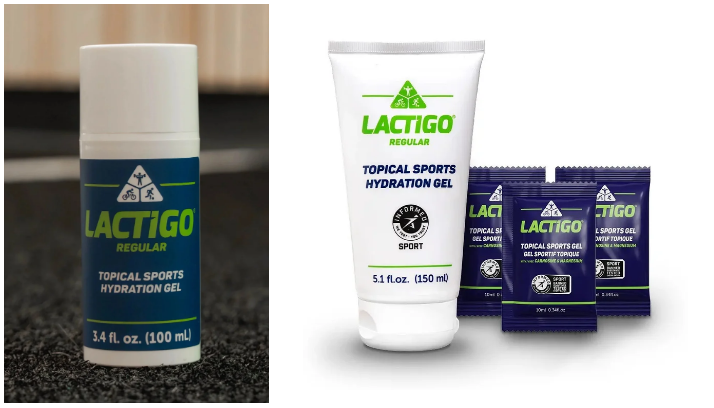
LactiGo’s current U.S. DailyMed label lists it as a menthol 1.5% topical gel. The same label lists L-carnosine and magnesium sulfate among the inactive ingredients, and the labeled uses are the temporary relief of minor muscle and joint aches associated with simple backache, arthritis, strains, bruises, and sprains. LactiGo’s own FAQ also says there are menthol and non-menthol versions, and notes that formulations can vary by territory.
How is LactiGo different from oral beta-alanine or oral carnosine supplements?
Oral beta-alanine is designed to raise muscle carnosine over time, not immediately. NIH’s Office of Dietary Supplements says beta-alanine is the rate-limiting precursor for muscle carnosine and that typical performance-oriented use involves 4–6 g/day for at least 2–4 weeks, with benefits generally discussed in high-intensity efforts lasting roughly 30 seconds to 10 minutes. NIH also notes that oral carnosine itself is a relatively inefficient way to raise muscle carnosine because it is digested into its constituent amino acids.
Does LactiGo require a loading phase like beta-alanine?
The selling point of topical carnosine products is convenience and faster onset. A 2016 study on LactiGo in elite male soccer players reported a statistically significant improvement in a 3 x 1000 m test and said the findings suggested a loading phase was not required. A 2025 study in world-class rugby sevens players also reported improved intermittent high-intensity performance after topical carnosine gel use. That said, the overall literature is not one-sided, because other cycling studies have reported no meaningful ergogenic benefit from transdermal carnosine products.
So is the performance evidence strong or still developing?
A fair answer is: promising, but mixed. There are positive athlete studies on topical carnosine gels, including the 2016 LactiGo paper and the 2025 rugby study, but there are also null findings in trained cyclists. That means it is more accurate to say LactiGo may support high-intensity performance and recovery than to say it is universally proven to outperform every oral or topical competitor. What I say is “Just try it and see for yourself!”, If you don’t like it, you can return 1 bottle and get your money back!
How is LactiGo different from Voltaren or diclofenac gel?
Voltaren Arthritis Pain gel is a different category entirely. Its active ingredient is diclofenac sodium 1%, which is a topical NSAID, and its labeled purpose is arthritis pain relief. LactiGo is not a diclofenac product and should not be described as an NSAID. A clean comparison is that Voltaren is positioned as a topical anti-inflammatory pain medicine, while LactiGo is positioned as a menthol-based topical gel with carnosine and magnesium for external use and active lifestyle support.
How does LactiGo compare with magnesium gels?
Many magnesium gels are marketed around muscle comfort or cramp support, but the evidence for meaningful systemic transdermal magnesium absorption is limited. A review in Nutrients noted that bathing and lotion studies generally did not show clear rises in blood magnesium and highlighted the weak evidence base for strong absorption claims. So if someone is choosing between a “magnesium gel” and LactiGo, the more honest distinction is that LactiGo is not just a magnesium product; it is a menthol + carnosine + magnesium topical formula with a separate performance/recovery positioning.
How does LactiGo compare with CBD or hemp topicals?
CBD and hemp topicals are commonly marketed for pain, but a 2025 AHRQ living systematic review said the evidence for topical CBD and several other cannabis-related or plant-based compounds remained insufficient to draw conclusions. One newer RCT looked at topical hemp seed oil versus diclofenac gel versus placebo for knee osteoarthritis, but the overall evidence base still was not enough for firm conclusions. That means CBD topicals may be popular, but the evidence is not clearly stronger than LactiGo’s performance-oriented niche.
How does LactiGo compare with arnica gels?
Arnica has some supportive evidence, especially in osteoarthritis and bruise-related contexts, but the broader evidence base is still limited. A Cochrane-style review found that in one hand osteoarthritis trial, Arnica gel performed similarly to topical ibuprofen, but overall the reviewers said the research quantity and quality were still insufficient for strong conclusions. So arnica is best framed as a botanical comfort option, while LactiGo is better framed as a performance/recovery-oriented topical rather than a traditional herbal pain gel.
How does LactiGo compare with ASEA RENU 28?
RENU 28 is positioned very differently. ASEA’s official product pages describe it as a skin renewal / skin feel / redox skincare gel, and the ingredient listing shown on ASEA shop pages is simply water, sodium magnesium fluorosilicate, sodium phosphate, and sodium chloride. By contrast, LactiGo’s current U.S. label centers on menthol topical analgesic use and lists L-carnosine and magnesium sulfate as inactive ingredients. In plain language: RENU 28 is mainly a skincare/redox product, while LactiGo is mainly a muscle/joint comfort and active-performance product.
What can I honestly say about LactiGo in marketing?
Strong, supportable wording would be: “LactiGo is a fast-drying topical gel for external use that combines menthol with L-carnosine and magnesium sulfate. It may support muscle comfort, recovery, and high-intensity activity, and some athlete studies on topical carnosine gels have reported short-term performance benefits.” That stays much closer to the label and the current mixed research picture.
What claims should I avoid?
Avoid saying LactiGo is “just like Voltaren,” “proven superior to CBD,” “proven systemically absorbed,” “guaranteed to raise muscle carnosine in everyone,” or “clinically proven to outperform beta-alanine.” The current evidence does not support those stronger claims cleanly enough. The safest posture is to describe LactiGo as a topical option with a distinct formula and promising but still developing performance evidence.
References
O’Toole TE, Amraotkar AR, Gao H, et al. Carnosine supplementation improves cognitive outcomes in younger participants of the NEAT trial. Neurotherapeutics. 2025.
Rokicki J, Li L, Imabayashi E, et al. Daily carnosine and anserine supplementation alters verbal episodic memory and resting-state network connectivity in healthy elderly adults. Front Aging Neurosci. 2015.
Chengappa KNR, Turkin SR, DeSanti S, et al. A randomized double-blind placebo-controlled trial of L-carnosine to improve cognition in schizophrenia. Schizophrenia Research. 2012.
Ghajar A, Aghajan-Nashtaei F, Afarideh M, et al. L-carnosine as adjunctive therapy in ADHD: randomized placebo-controlled trial. J Child Adolesc Psychopharmacol. 2018.
Houjeghani S, Kheirouri S, Faraji E, et al. L-carnosine supplementation reduces advanced glycation end products and inflammatory markers in type-2 diabetes. Nutrition Research. 2018.
Chez MG, Buchanan CP, Aimonovitch MC, et al. Double-blind placebo-controlled study of L-carnosine supplementation in autism spectrum disorder. J Child Neurol. 2002.
Schön M, Mousa A, Berk M, et al. The potential of carnosine in brain-related disorders. Nutrients. 2019.
Ouyang L, Tian Y, Bao Y, et al. Carnosine protects neurons by targeting glutamate signaling and mitochondrial bioenergetics. Brain Research Bulletin. 2016.
Kim EH, Kim ES, Shin D, et al. Carnosine protects against cerebral ischemic injury by inhibiting matrix metalloproteinases. Int J Mol Sci. 2021.
Privitera A, Cardaci V, et al. Carnosine protects human microglia from oxidative stress and metabolic dysfunction. Front Pharmacol. 2023.
Abdel Baky NA, Fadda L, et al. Neuroprotective effects of carnosine after traumatic brain injury in rats. Toxicol Mech Methods. 2016.
Baraniuk JN, et al. Carnosine treatment for Gulf War illness: randomized clinical trial. Global Journal of Health Science. 2013.
Masuoka N, Yoshimine C, et al. Anserine/carnosine supplementation improves cognitive function in mild cognitive impairment. Nutrients. 2019.
Additional research sources:
Evaluation of the Efficacy of LactiGo Topical Gel as an Ergogenic Aid (physical performance, stamina, or recovery)
Circulation Supplement Research on Carnosine
Equine exercise physiology research (My note: “Horses have no Placebo effect”
New Zealand athlete performance studies