Evidence for Lactigo Gel.
/

I was first introduced to carnosine through a patch called Lifewave. I have heard of Carnosine but never studied it.
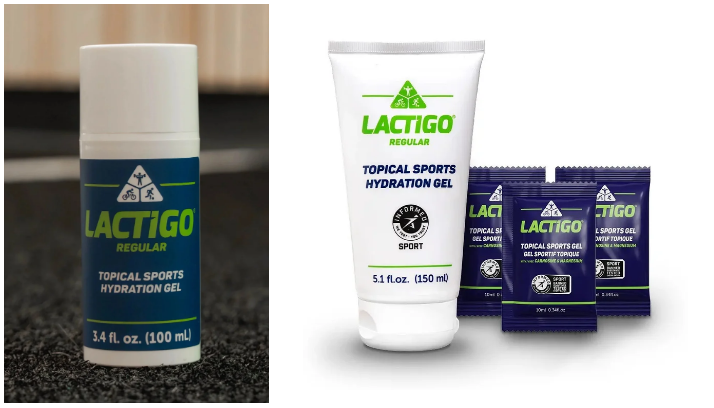
LactiGo is different. Instead of relying on frequency stimulation, like in Lifewave, it delivers carnosine directly through the skin, allowing the molecule itself to enter the tissues transdermally.
That difference caught my attention.
“I had right shoulder pain while playing pickleball. When I applied LactiGo gel to my shoulder, the pain disappeared in less than two minutes.”
— Dr. Paul Kwik
This experience made me curious about the science behind topical carnosine and how it may support muscle recovery, buffering of acidity, and tissue performance.
1. Strong Evidence for Carnosine (the active compound)
There is substantial research on carnosine itself.
What is Carnosine?
Carnosine is a naturally occurring dipeptide made from two amino acids—beta-alanine and histidine. It is often described as a non-essential compound, meaning the body can produce it on its own without needing to obtain it directly from food.
However, there are two important factors to understand when thinking about carnosine levels in the body:
Absorption and utilization can be limited with oral intake
When carnosine is taken orally, much of it is broken down in the bloodstream by an enzyme called carnosinase, which means only a portion reaches tissues such as muscles or the brain in its intact form.Carnosine levels decline with aging
Research shows that carnosine concentrations in muscle and other tissues tend to decrease as we age, which may affect buffering capacity, muscle performance, and cellular protection.
This is why researchers have explored alternative delivery methods, including topical or transdermal approaches, to help deliver carnosine more directly to tissues.
Documented benefits of carnosine include:
Antioxidant
Carnosine scavenges:
hydroxyl radicals
peroxynitrite
reactive aldehydes
Anti-glycation
Carnosine can reduce AGE formation. AGEs contribute to:
aging
diabetes
neurodegeneration
Mitochondrial protection
Carnosine protects mitochondria from:
oxidative damage
lipid peroxidation
pH buffering
Carnosine buffers acid during metabolic stress.
Neurological effects
Studies suggest potential benefits in:
autism
cognitive decline
neuroinflammation
Example clinical research:
Autism trials (2002–2006) showed improved language and behavior scores
Anti-glycation studies suggest longevity and metabolic protection
(However, most studies used oral supplementation, not topical delivery.)
2. Evidence for Transdermal Delivery
Transdermal delivery depends on:
molecular size
lipophilicity
formulation technology
General facts:
Skin blocks ~90–95% of molecules
Only small or specially formulated molecules penetrate
Well-established transdermal drugs include:
nicotine
testosterone
estradiol
fentanyl
For carnosine:
Evidence is limited.
However:
Some topical peptide studies show localized absorption and tissue signaling, even without large systemic blood levels.
This could explain anecdotal effects.
3. Why People Report Effects (Anecdotal Evidence)
Many users report:
calmness
improved sleep
reduced muscle fatigue
improved neurological symptoms
Possible explanations:
Local nerve modulation
Skin contains a dense neuroimmune network.
Topical compounds can influence:
peripheral nerves
cytokines
nitric oxide signaling
Local buffering
Bicarbonate may alter:
tissue pH
inflammatory microenvironment
Placebo or sensory effect
Menthol or cooling may contribute to perceived effects.
4. Strength of Evidence (Evidence Pyramid)
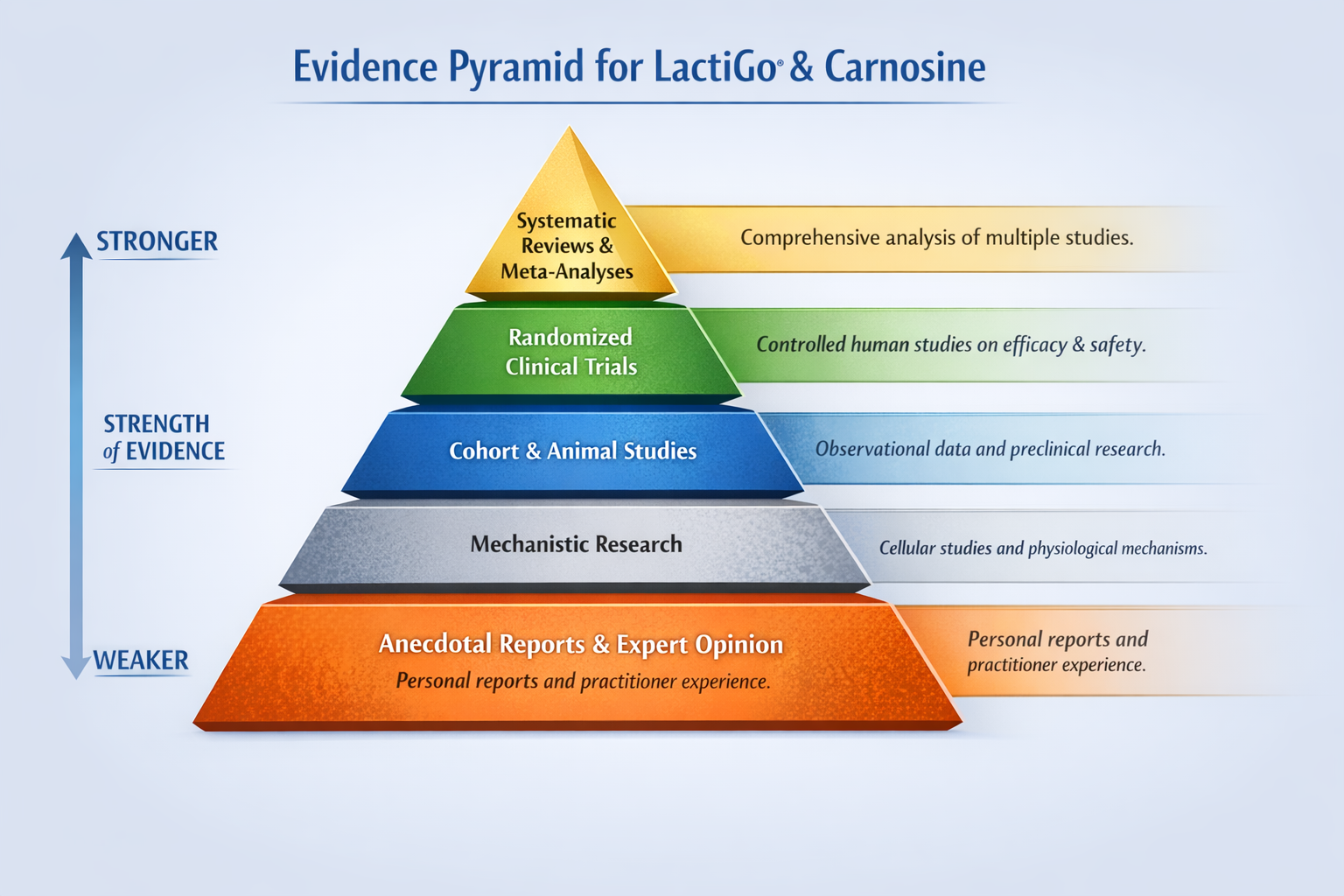
Why Topical Carnosine (LactiGo) May Work Through the Skin–Brain Axis
A growing concept in physiology is that the skin is not just a barrier — it is a neuro-immune sensory organ connected to the brain.
Topical compounds can influence nerve signaling, inflammation, and autonomic tone even when systemic blood levels are low.
1. The Skin Is Rich in Nerve Endings
Human skin contains millions of sensory receptors.
Major types:
• Free nerve endings – detect pain, temperature, chemicals
• C-fibers – slow nerve fibers linked to autonomic and emotional regulation
• Mechanoreceptors – pressure and touch sensors
These nerves communicate with:
spinal cord
brainstem
hypothalamus
vagus nerve system
This network is sometimes called the cutaneous neuro-immune system.
2. The Skin Communicates With the Brain
The skin actually produces many signaling molecules.
Examples:
nitric oxide
cytokines
neuropeptides
endorphins
Skin cells also contain receptors for:
serotonin
dopamine
acetylcholine
cortisol
This means chemical signals applied to skin can influence systemic physiology through neural signaling rather than bloodstream absorption.
3. The Skin–Brain–Immune Axis
Researchers now refer to this network as the:
Skin–Brain Axis
The pathway works like this:
Skin stimulus
⬇
Peripheral nerve activation
⬇
Signals travel to spinal cord
⬇
Brainstem autonomic centers
⬇
Changes in:
vagus nerve activity
stress response
inflammation
immune signaling
This is one reason massage, acupuncture, and topical treatments can influence the nervous system.
4. Why This Matters for Carnosine
Carnosine has several properties that could influence this system.
Anti-glycation - Reduces reactive carbonyl compounds that irritate tissues.
Antioxidant activity - Neutralizes oxidative stress that activates pain fibers.
pH buffering - Neutralizes local acidity.
Nitric oxide modulation - Influences vascular tone and nerve signaling.
When applied to skin, these actions may:
calm irritated nerve endings
reduce inflammatory signals
alter autonomic balance
5. Possible Vagus Nerve Effects
Peripheral nerve signaling can affect the vagus nerve, which controls:
digestion
inflammation
heart rate
emotional regulation
Improved vagal tone can produce:
calmness
reduced anxiety
improved digestion
improved metabolic signaling
This may explain anecdotal reports such as:
calmer children with autism
improved sleep
improved mood
6. Another Possible Mechanism: Nitric Oxide
Carnosine can influence nitric oxide signaling. Nitric oxide regulates:
blood flow
mitochondrial signaling
neuronal communication
Topical stimulation of nitric oxide pathways may produce systemic effects even with minimal absorption.
7. Why Athletes Studies May Miss These Effects
Most sports studies only measure:
performance
lactate
muscle buffering
But they do not measure:
autonomic nervous system changes
vagal tone
brain inflammation
neuroimmune signaling
Therefore a product could:
Have neurological effects but still fail athletic performance studies.
8. Practical Clinical Interpretation
For a clinician evaluating LactiGo:
Evidence hierarchy:
Strong evidence
• carnosine biological effects
Moderate evidence
• neuroimmune signaling through skin
Weak evidence
• systemic absorption of topical carnosine
However: Neural signaling through skin is biologically plausible and increasingly recognized.
Simplified Summary
Topical LactiGo may work through three pathways:
1️⃣ Local buffering and antioxidant effects in tissue
2️⃣ Activation of skin nerve receptors
3️⃣ Signaling to the brain through the skin–brain axis and vagus nerve
These mechanisms could explain why some patients experience:
calmness
neurological improvement
metabolic benefits
even if blood levels of carnosine do not rise significantly.
Timeline of Major Scientific Discoveries About Carnosine
| Year | Discovery |
|---|---|
| 1900 | Carnosine first identified in skeletal muscle tissue by Russian scientist Vladimir Gulevich |
| 1930s | Recognized as a pH buffer in muscle metabolism |
| 1970s | Researchers discover its antioxidant and metal-chelating properties |
| 1980s | Carnosine found in high concentrations in brain tissue |
| 1990s | Studies reveal anti-glycation and anti-aging effects |
| 2000 | First clinical trials exploring carnosine in neurological conditions |
| 2002 | Randomized study shows improvements in autism spectrum disorder symptoms |
| 2010–2015 | Increasing research on mitochondrial protection and neuroprotection |
| 2018 | Clinical trial demonstrates reduction in AGEs and inflammatory markers in diabetes |
| 2020s | Growing interest in brain injury, aging, metabolic disease, and exercise physiology |
This timeline highlights how carnosine has evolved from a muscle metabolite discovery to a compound being investigated for brain health, metabolic disease, and cellular aging.
Final Perspective
Carnosine represents a unique multi-mechanistic biological molecule that interacts with several major systems involved in health and disease.
Scientific research suggests potential benefits in:
oxidative stress regulation
mitochondrial function
neurotransmitter balance
inflammation modulation
metabolic and glycation stress
Although topical formulations like LactiGo are still an evolving area of research, the underlying science of carnosine provides a strong mechanistic foundation for continued investigation.
The Bottom Line
Although topical formulations like LactiGo are still an evolving area of research, the underlying science of carnosine provides a strong mechanistic foundation for continued investigation.
Scientific evidence strongly supports carnosine as a biologically active and protective molecule with roles in:
oxidative stress defense
mitochondrial energy metabolism
neurotransmitter balance
anti-inflammatory regulation
metabolic protection.
While research on topical delivery methods such as LactiGo is still developing, the underlying biochemical science of carnosine provides a compelling rationale for continued investigation.
Affiliate disclosure:
References
O’Toole TE, Amraotkar AR, Gao H, et al. Carnosine supplementation improves cognitive outcomes in younger participants of the NEAT trial. Neurotherapeutics. 2025.
Rokicki J, Li L, Imabayashi E, et al. Daily carnosine and anserine supplementation alters verbal episodic memory and resting-state network connectivity in healthy elderly adults. Front Aging Neurosci. 2015.
Chengappa KNR, Turkin SR, DeSanti S, et al. A randomized double-blind placebo-controlled trial of L-carnosine to improve cognition in schizophrenia. Schizophrenia Research. 2012.
Ghajar A, Aghajan-Nashtaei F, Afarideh M, et al. L-carnosine as adjunctive therapy in ADHD: randomized placebo-controlled trial. J Child Adolesc Psychopharmacol. 2018.
Houjeghani S, Kheirouri S, Faraji E, et al. L-carnosine supplementation reduces advanced glycation end products and inflammatory markers in type-2 diabetes. Nutrition Research. 2018.
Chez MG, Buchanan CP, Aimonovitch MC, et al. Double-blind placebo-controlled study of L-carnosine supplementation in autism spectrum disorder. J Child Neurol. 2002.
Schön M, Mousa A, Berk M, et al. The potential of carnosine in brain-related disorders. Nutrients. 2019.
Ouyang L, Tian Y, Bao Y, et al. Carnosine protects neurons by targeting glutamate signaling and mitochondrial bioenergetics. Brain Research Bulletin. 2016.
Kim EH, Kim ES, Shin D, et al. Carnosine protects against cerebral ischemic injury by inhibiting matrix metalloproteinases. Int J Mol Sci. 2021.
Privitera A, Cardaci V, et al. Carnosine protects human microglia from oxidative stress and metabolic dysfunction. Front Pharmacol. 2023.
Abdel Baky NA, Fadda L, et al. Neuroprotective effects of carnosine after traumatic brain injury in rats. Toxicol Mech Methods. 2016.
Baraniuk JN, et al. Carnosine treatment for Gulf War illness: randomized clinical trial. Global Journal of Health Science. 2013.
Masuoka N, Yoshimine C, et al. Anserine/carnosine supplementation improves cognitive function in mild cognitive impairment. Nutrients. 2019.
Additional research sources:
Evaluation of the Efficacy of LactiGo Topical Gel as an Ergogenic Aid (physical performance, stamina, or recovery)
Circulation Supplement Research on Carnosine
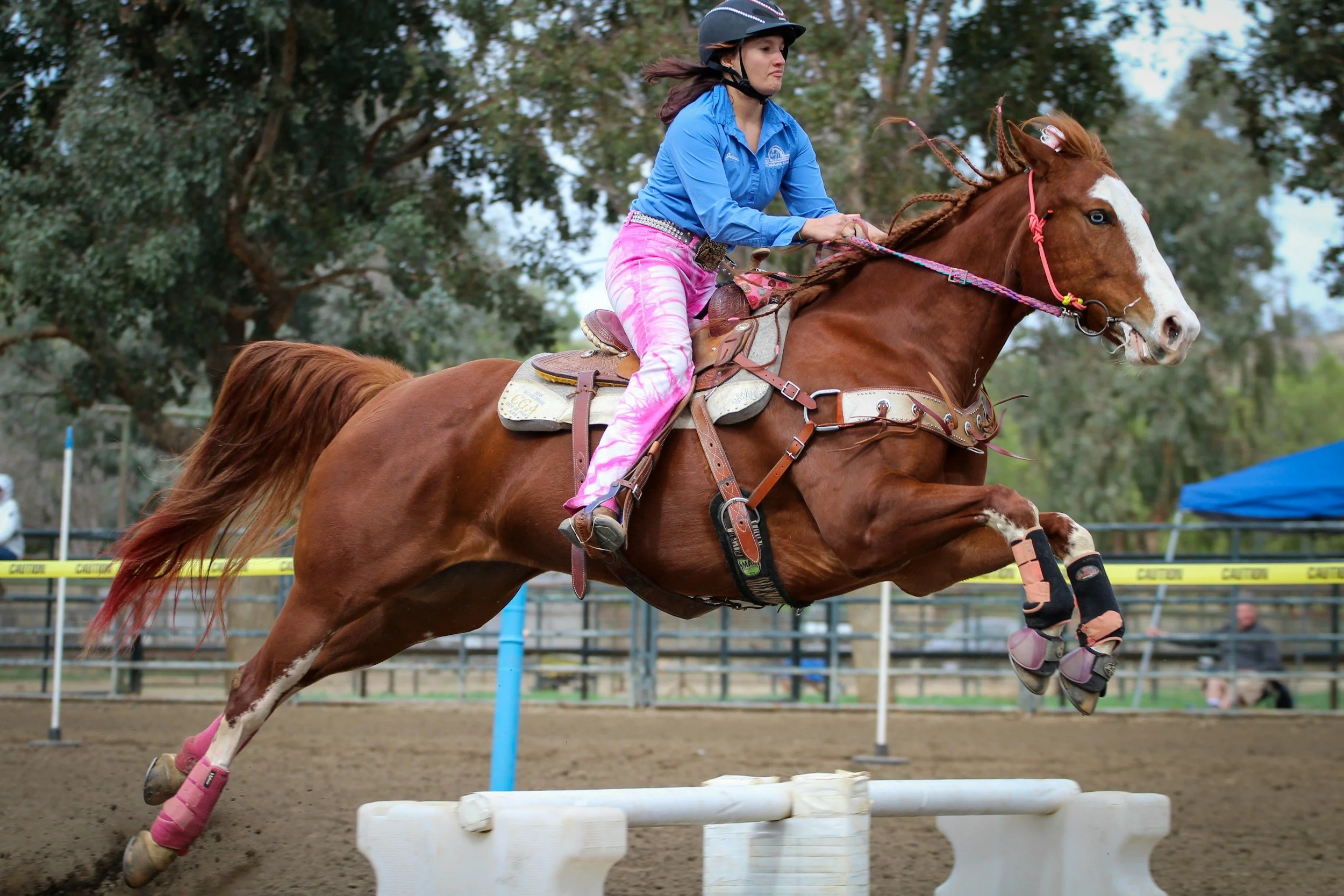
Equine exercise physiology research (My note: “Horses have no Placebo effect”
New Zealand athlete performance studies