Auricular Acupuncture for Body fat reduction, and Healthy Blood affecting the Heart: What the Research Suggests
/
Weight management is influenced by many factors, including appetite, eating behavior, metabolism, physical activity, stress, and overall lifestyle. Alongside conventional approaches such as nutrition and exercise, auricular acupuncture, also known as ear acupuncture or auriculotherapy, has been explored as a complementary approach to weight control.
The material provided describes several clinical studies examining whether stimulation of specific points on the ear may influence appetite, digestion, body weight, and blood lipid levels. While these findings are interesting, auricular acupuncture should be viewed as a complementary therapy rather than a stand-alone treatment for obesity or a replacement for evidence-based medical care.
What Is Auricular Acupuncture?
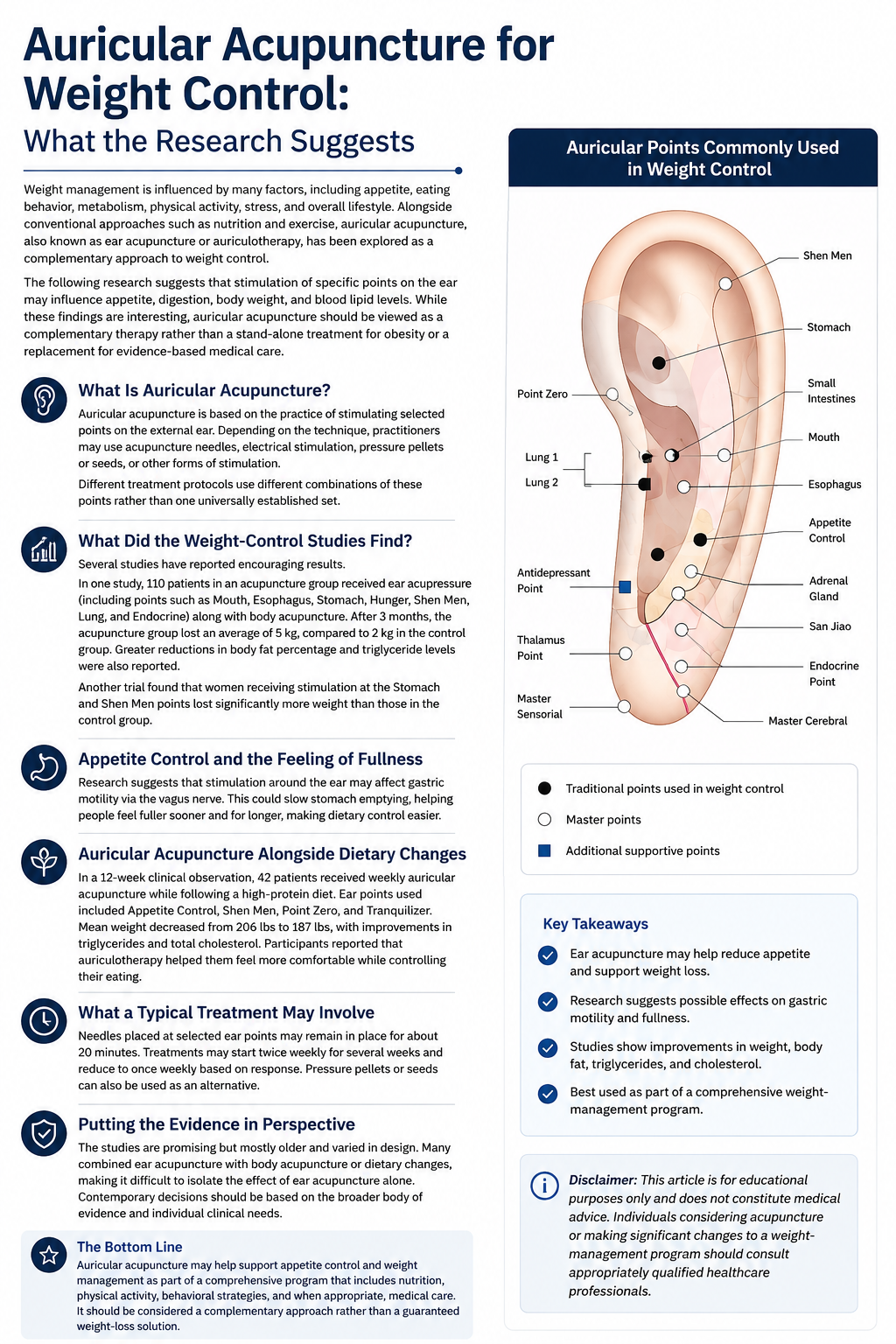
Auricular acupuncture is based on the practice of stimulating selected points on the external ear. Depending on the technique, practitioners may use acupuncture needles, electrical stimulation, pressure pellets or seeds, or other forms of stimulation.
In the weight-control protocol illustrated in the source material, several ear points are identified, including:
Shen Men
Stomach
Small Intestines
Mouth
Esophagus
Appetite Control
Endocrine
Point Zero
Adrenal Gland
San Jiao
Master Cerebral
Master Sensorial
Different treatment protocols use different combinations of these points rather than one universally established set.
Why Might Ear Acupuncture Affect Appetite?
One proposed explanation involves the vagus nerve, which plays an important role in communication between the brain and digestive system.
The source describes a theory that stimulation of the auricular branch of the vagus nerve could influence gastric activity and appetite. Researchers have proposed mechanisms involving changes in gastric muscle activity and neurotransmitters such as serotonin. These mechanisms, however, should be regarded as proposed explanations rather than proof that ear acupuncture reliably causes weight loss.
Another experiment described in the material examined gastric peristalsis after clips were applied to the tragus of the ear. The investigators reported a reduction in the frequency of peristaltic waves while the clips were applied, with activity returning toward normal after their removal. The researchers suggested that delayed gastric emptying might contribute to an earlier sensation of fullness.
What Did the Weight-Control Studies Find?
Several older studies discussed in the source reported potentially encouraging results.
In one study described by Sun and Xu (1993), 110 patients in an acupuncture group were compared with 51 patients receiving an oral medication for weight control. The acupuncture treatment included ear acupressure as well as body acupuncture.
The ear points included Mouth, Esophagus, Stomach, Abdomen, Hunger, Shen Men, Lung, and Endocrine. Pressure pellets made from vaccaria seeds were placed on appropriate points of both ears.
After the three-month study period, the acupuncture group reportedly experienced an average body-weight reduction of approximately 5 kg, compared with approximately 2 kg in the control group. The source also reports greater reductions in body-fat percentage and triglyceride levels in the acupuncture group.
A randomized controlled trial by Richards and Marley (1998) similarly reported significantly greater weight loss among women receiving stimulation of the Stomach and Shen Men ear points than among women in the control group.
Appetite Control and the Feeling of Fullness
One particularly interesting aspect of auricular therapy is its proposed effect on hunger rather than simply body weight.
The source describes research suggesting that stimulation around the ear could potentially affect gastric motility. If stomach emptying is delayed, a person might experience fullness sooner or for a longer period, potentially making dietary control easier.
This proposed appetite-regulating effect may explain why points such as Appetite Control, Stomach, Shen Men, and Point Zero appear in some auricular weight-management protocols.
Auricular Acupuncture Alongside Dietary Changes
The material also describes clinical observations reported by Niemtzow (1998) involving 42 patients with obesity. Participants received weekly auricular acupuncture while following a high-protein diet.
The ear points used included:
Appetite Control, Shen Men, Point Zero, and Tranquilizer.
Needles were reportedly placed in both ears for approximately 15 minutes. Over 12 weeks, the group's mean weight decreased from approximately 206 pounds to 187 pounds. The source also reports changes in triglycerides and a statistically significant reduction in total cholesterol.
Participants reportedly felt that auriculotherapy made them more comfortable while trying to control their eating.
Importantly, these patients were simultaneously following a dietary intervention. Therefore, the observed weight changes cannot automatically be attributed to ear acupuncture alone.
What a Typical Treatment May Involve
According to the material, needles placed at selected ear points may remain in position for approximately 20 minutes, similar to body acupuncture. Treatment may initially occur twice weekly for several weeks and later decrease to once weekly, depending on the treatment plan and response.
Other approaches can involve pressure pellets or seeds placed on the ear so that selected points can be stimulated without conventional acupuncture needles.
Treatment protocols can vary considerably, and acupuncture involving needles should be performed by an appropriately trained and licensed practitioner where required.
Putting the Evidence in Perspective
The studies described in this material are intriguing, but they are primarily older investigations and should not be interpreted as definitive proof that auricular acupuncture produces substantial or lasting weight loss.
Weight loss research is particularly difficult because diet, physical activity, behavioral changes, medications, health conditions, and other interventions can all affect outcomes. Some of the studies described here combined auricular therapy with body acupuncture or dietary changes, making it difficult to determine how much of the observed benefit came specifically from stimulation of the ear.
For that reason, contemporary clinical decisions should consider the broader and more recent body of scientific evidence rather than relying on these individual studies alone.
The Bottom Line
Auricular acupuncture offers an interesting example of how complementary medicine has attempted to address appetite and weight management through stimulation of specific ear points. Older studies described in the source reported reductions in weight, body fat, triglycerides, and appetite-related symptoms, while proposed mechanisms involve the vagus nerve, gastric activity, and feelings of fullness.
These findings make auriculotherapy an area worthy of continued research, but it should not be presented as a guaranteed weight-loss treatment. Sustainable weight management generally requires a broader approach involving appropriate nutrition, physical activity, behavioral strategies, and, when indicated, professional medical treatment.
For people interested in auricular acupuncture, the most appropriate role may be as a complementary component of a comprehensive weight-management program, undertaken with qualified healthcare professionals.
Disclaimer: This article is for educational purposes only and does not constitute medical advice. Individuals considering acupuncture or making significant changes to a weight-management program should consult appropriately qualified healthcare professionals.
Double-click to edit...